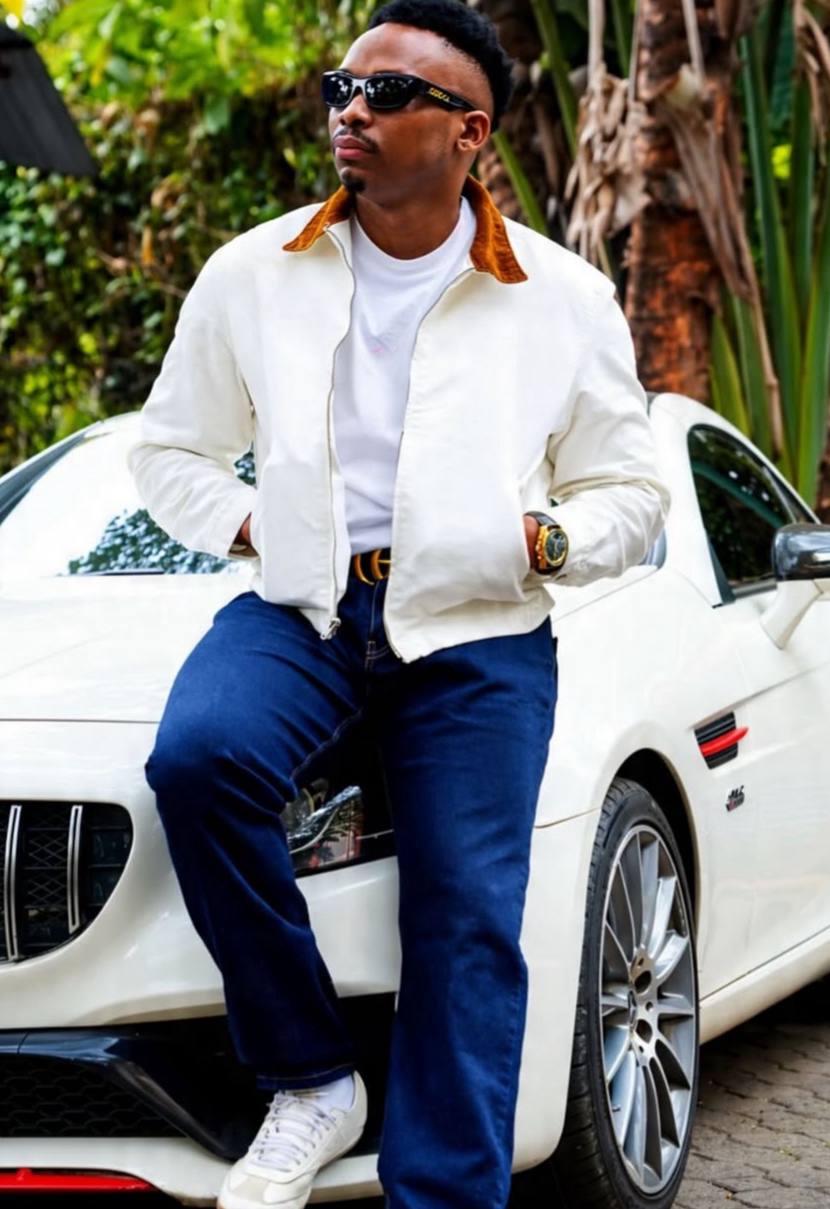
The highly publicized fallout between Kenyan R&B star Otile Brown and his former musical collaborator, Jovial, has reached a point of absolute severance. Otile has officially drawn an indelible line regarding their relationship, issuing a public directive banning the female vocalist from attending his funeral should he pass away.
Speaking on the Over 1M Podcast hosted by Tony Mwirigi, Otile laid bare the permanent psychological damage caused by their recent disputes. “Where it has reached between me and Jovial, she’s somebody that today I dare to say that even if I die today, Jovial is someone who should not be allowed at my funeral,” the singer stated, emphasizing the gravity of the betrayal. “That’s how deep she hurt me.”
The bitter exile stands in stark contrast to the sanctuary Otile once offered the Mombasa-born vocalist. He was instrumental in launching her mainstream career, financing her early projects, and collaborating on massive chart-topping hits such as Such Kinda Love. However, the professional foundation collapsed earlier this year, exposing a deeply entangled personal and financial history.
The Split Sheet Dispute
The origin of the current hostility traces back to July 2026, when Jovial appeared on Alex Mwakideu’s podcast and leveled severe financial allegations against her former mentor. She accused Otile of systematic financial sabotage, claiming she was actively kept from her share of revenue and denied formal split-sheet agreements for their collaborative tracks. Describing Otile as difficult to work with, Jovial alleged she received only a single payout of KSh 150,000 after continuous complaints, vowing never to record with him again.
Otile quickly mounted a detailed defense regarding his business record. He dismissed claims of intentional fraud, attributing the royalty friction to inherent flaws in African music distribution networks and a mutual lack of publishing knowledge during the early stages of their careers. He maintained that artists frequently resort to settling payments informally because institutional distributors often disregard split sheets. Furthermore, Otile accused Jovial of illegally releasing their unapproved collaboration, Ulinihukumu, without his creative consent.
The DNA Bombshell
The financial disagreement rapidly deteriorated into a deeply personal crossfire. Pushed by the public accusations, Otile utilized his Instagram Stories to drop a massive revelation that caught the industry entirely off guard. The singer disclosed that a formal DNA test had cleared him of being the biological father of Jovial’s child.
His remarks heavily suggested that Jovial was disappointed by the medical results, immediately sparking intense public speculation regarding the true nature of their past relationship. Prior to the disclosure, neither artist had publicly confirmed a romantic entanglement, allowing fans to assume their chemistry was strictly professional.
The DNA revelation forced an immediate retreat from Jovial. Acknowledging the severe miscalculation of bringing their private grievances to the public arena, she issued a rapid apology aimed at protecting her child from the digital fallout. “I want to take this opportunity to apologize to Otile Brown for the sake of my peace and for the sake of my child getting involved in all this!” Jovial wrote at the time. “He’s innocent and doesn’t deserve this! This is my mess!”
Despite her public concession and attempt to draw a line under the drama, Otile’s latest podcast remarks confirm that the bridge is permanently burned. For the R&B star, the combination of financial defamation and the weaponization of their private history has exhausted all avenues for reconciliation—dead or alive.
Should artists establish strict legal boundaries separating their personal relationships from their professional collaborations?

Culture is constantly shifting, and the art we create defines who we are. I love documenting the creative energy, music, and digital trends that shape our modern identity.