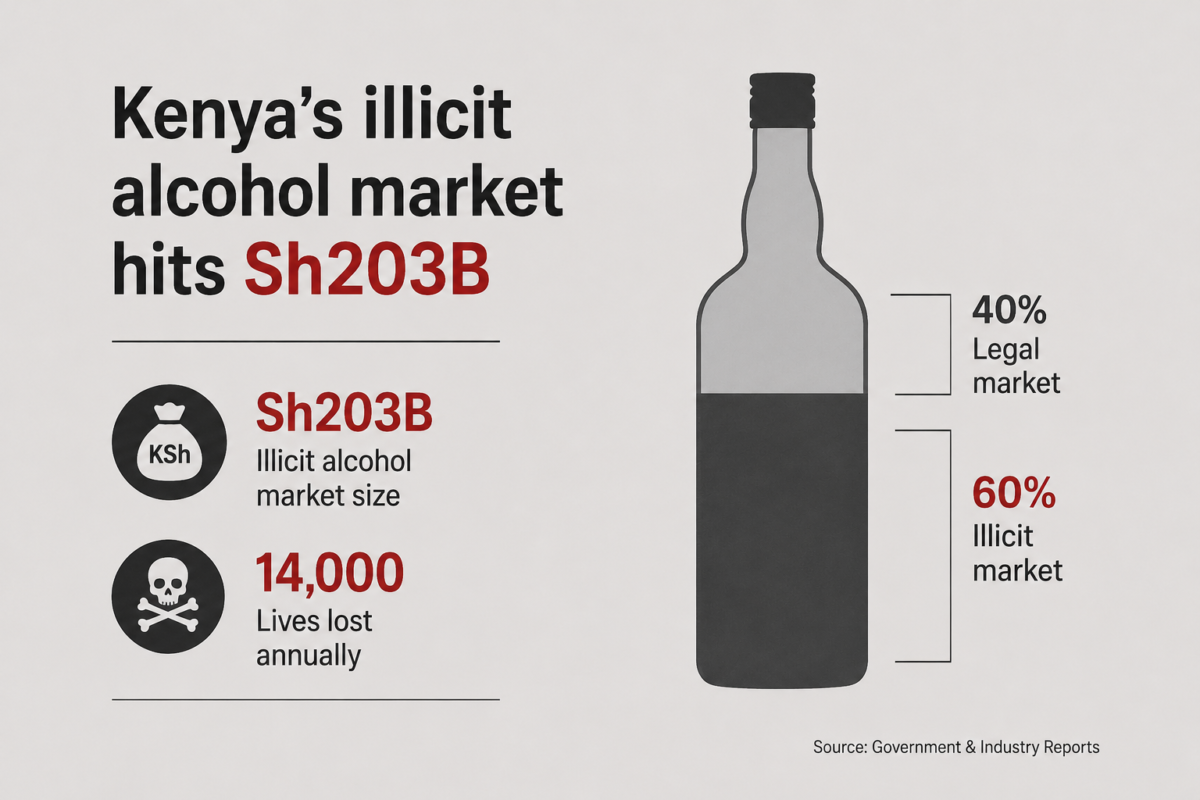
Kenya’s underground alcohol trade has ballooned into a Sh203 billion shadow industry, now controlling a staggering 60 percent of all alcohol consumed nationwide. The sheer volume of unregulated brew circulating through urban informal settlements and rural townships has transformed what was once viewed as a localized enforcement headache into a national economic hemorrhage and a severe public health emergency.
The fiscal toll on state coffers is immense. The Kenya Revenue Authority and national treasury lose over Sh120 billion every year in uncollected excise duties, corporate taxes, and Value Added Tax (VAT)—revenue that could otherwise fund public healthcare, education, or infrastructure projects. Legitimate distillers and brewers, overburdened by heavy statutory taxes, find themselves priced out by untaxed, illicit alternatives manufactured without compliance costs or safety overheads.
The human cost, however, is far more catastrophic. Adulterated spirits, lethal chemical spikes like industrial methanol, and unhygienic informal distillation methods claim more than 14,000 Kenyan lives annually. Beyond the mortality rate, emergency rooms across public hospitals handle thousands of cases involving permanent blindness, kidney damage, and acute chemical poisoning linked to counterfeit bottled spirits and illicit concoctions.
The persistence of this underground market exposes deep institutional failure and systemic corruption across regulatory and security networks. Multi-agency crackdowns frequently falter as illicit ethanol continues to cross porous border points or leak out of industrial supply chains. Local enforcement efforts are often compromised by bribery networks that shield illegal manufacturing dens and distributors from closure, allowing rogue operators to resume production within days of a police raid.
While government authorities periodically order high-profile crackdowns—typically in the wake of tragic mass-poisoning incidents—long-term policy remains fragmented. Key questions remain over whether aggressive tax hikes on legal alcohol are inadvertently driving low-income consumers directly into the hands of illicit brewers. Until the government combines strict, uncorrupted border control with a balanced tax policy that makes safe alcohol accessible, Kenya’s Sh203 billion illicit liquor economy will continue to thrive at the expense of human lives.

Numbers tell a story, but only if you know how to listen to them. I focus on making sense of the shifting economy, keeping track of where the money goes and how it impacts daily lives.