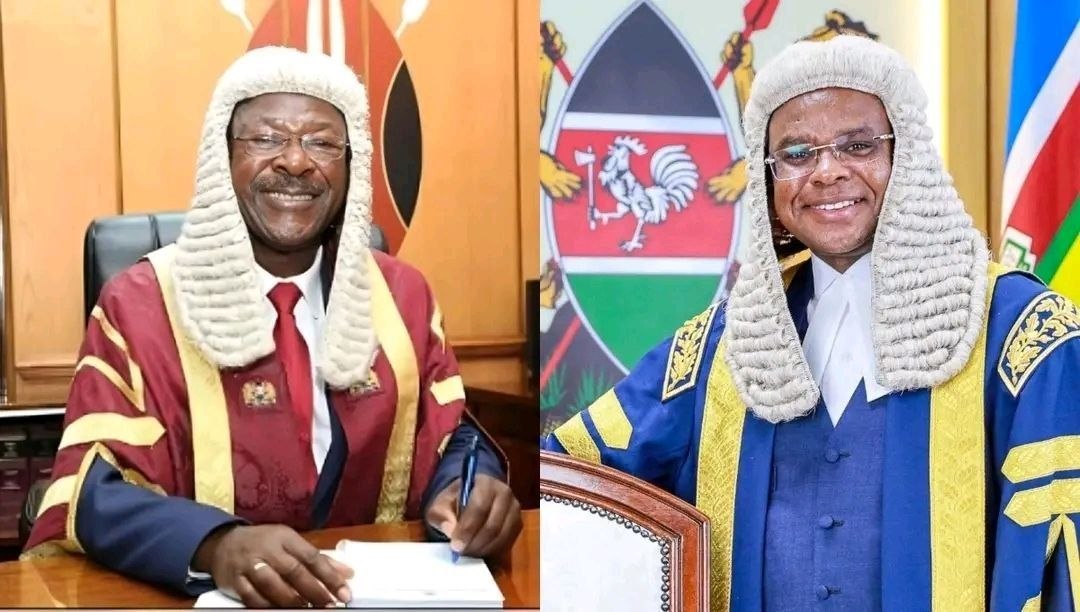
High Court Justice David Mburu has struck out a constitutional petition seeking to bar National Assembly Speaker Moses Wetang’ula and Senate Speaker Amason Kingi from participating in active political campaigns. The court ruled that the lawsuit was brought prematurely, as the petitioners failed to pursue established administrative remedies before seeking judicial intervention.
The decision follows a preliminary objection raised by the respondents in response to a petition filed by civil society group Vocal Africa. Justice Mburu held that the lobby group failed to comply with the doctrine of exhaustion. Specifically, the petitioners had not lodged a formal complaint with the Ethics and Anti-Corruption Commission (EACC), the constitutional body legally mandated to investigate alleged breaches of Chapter Six of the Constitution, the Leadership and Integrity Act, and the Conflict of Interest Act.
The petition was filed following public appearances by both Speakers at partisan political gatherings, where critics argued their participation compromised the institutional neutrality required of Parliament’s presiding officers. Vocal Africa contended that active involvement in coalition politics creates an immediate conflict between official parliamentary duties and personal political interests.
In defense filings, legal representatives for Wetang’ula and Kingi urged the court to throw out the case, emphasizing that the Constitution explicitly distinguishes between appointed and elected state officers. Defense counsel argued that under Article 77(2), restrictions against holding political office or participating in political activities apply strictly to appointed officers. They maintained that as elected leaders presiding over a bicameral legislature, the Speakers retain their constitutional rights to political expression.
The EACC and the Office of the Attorney General also supported the preliminary objections, arguing that bypassing statutory mechanisms undermines established oversight frameworks. Justice Mburu agreed, stating that Vocal Africa had not demonstrated any exceptional circumstances or evidence of administrative hostility that would justify skipping the EACC process.
Because the court upheld the preliminary objections on jurisdictional grounds, Justice Mburu struck out the petition without addressing the substantive merits of the claims or considering the application for conservatory orders. The ruling establishes that any future challenges regarding the political conduct of parliamentary presiding officers must first be submitted to the EACC for regulatory review before reaching the High Court.