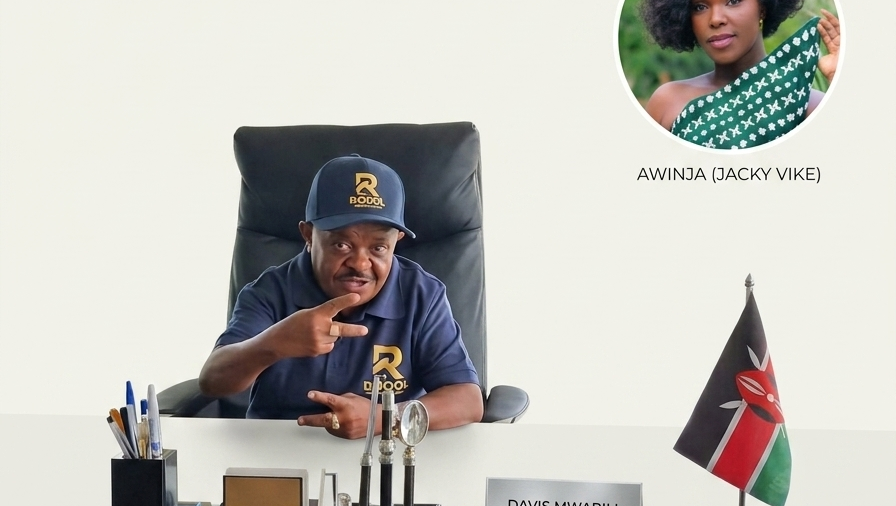
For over two decades, the name “Mwala” has been much more than just a stage name; it has been a household institution, a source of laughter, and a staple of Kenyan pop culture. But the man behind the badge, Davis Mwabili, is currently trading his comedic scripts for legal filings. In a move that has sent the Kenyan entertainment industry into a frenzy, the veteran actor has launched a staggering KSh 163 million lawsuit against global giant Coca-Cola and digital sensation Jacky Vike, popularly known as Awinja. At the heart of the storm is the “Kachingching na Coke” campaign, which Mwala claims didn’t just miss the mark—it allegedly hijacked his entire legacy.
The lawsuit isn’t just about a disgruntled artist; it’s a high-stakes battle over intellectual property and brand identity. Mwabili argues that the campaign unfairly benefited from his hard-earned reputation by using content derived from his copyrighted material without a single handshake or contract. The Inspector’s legal team is particularly focused on the use of the name “Mwala” and the viral phrase “ka-mwala,” asserting that these aren’t just words—they are trademarks of a brand built over 25 years of television, radio, and live performances. According to Mwala, the campaign creates a false sense of endorsement, leaving the public under the impression that he was part of the deal while he sat on the sidelines.
—
The “Ka-Mwala” Conundrum: Slang or Trademark?
What makes this case truly juicy is the debate over linguistic ownership. In the streets of Nairobi, “ka-mwala” has often been used to describe something small yet powerful, or even as slang for money. However, Mwabili is drawing a firm line in the sand, insisting that the rights to the “Mwala” name remain legally protected until 2030. He maintains that Coca-Cola and Awinja commercially exploited this cultural shorthand to sell soda, effectively “cashing in” on a persona he spent a lifetime perfecting. By seeking KSh 163 million, Mwala is making it clear that his brand isn’t a public utility for corporations to use at their whim.
The inclusion of Awinja in the suit adds a modern, dramatic layer to the conflict. As one of Kenya’s most successful content creators, Awinja was the face that brought the “Kachingching” energy to the masses. By naming her alongside Coca-Cola, Mwala is setting a terrifying precedent for influencers across the country. The message is loud and clear: if you’re an influencer, you are no longer just a “hired gun” for a brand; you are legally responsible for the IP you help broadcast. If the court sides with Mwala, influencers might soon need their own legal teams to vet scripts before they hit “upload.”
“This isn’t just about the money; it’s about the decades of work that go into building a brand. You can’t just pick a name off the street and put it on a billboard without consequences.” — *The core sentiment echoing through the industry.*
A Landmark Moment for Kenyan Creatives
This legal showdown is a wake-up call for the entire creative economy in Kenya. For years, artists have complained about “exposure” being their only payment while corporations reap billions. By taking on a behemoth like Coca-Cola, Mwala is testing the strength of Kenya’s copyright laws in the digital age. If he wins, it could trigger a domino effect, leading other veteran stars to look back at past campaigns and wonder if they, too, were “commercially exploited” without fair compensation.
As the case heads to court, the “Kachingching” campaign is no longer just about winning prizes—it’s about who truly owns the culture that sells the products. Whether this ends in a massive settlement or a landmark ruling, the Inspector has officially put the industry on notice. One thing is for certain: the days of using iconic Kenyan characters for “free” might be coming to an expensive end.
Do you think Mwala is right to protect his brand so fiercely, or has “ka-mwala” become too much a part of the common language to be owned by one person?