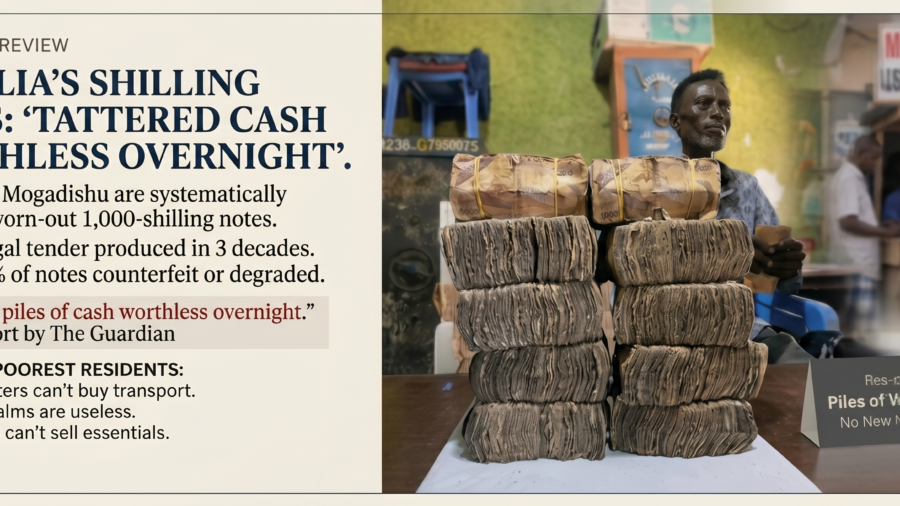
The economic stability of Mogadishu’s low-income population has been compromised as traders and public transport operators have begun a systematic rejection of the Somali shilling. The 1,000-shilling note, which currently serves as the final widely circulating denomination, is being turned away due to extreme physical degradation. This spontaneous refusal by the market has effectively rendered the cash savings of thousands of residents worthless, creating an immediate barrier to trade and essential services.
The collapse of the currency’s utility is the result of a three-decade hiatus in the production of legal tender. Since 1991, the Somali government has not issued new banknotes, leading to a market where an estimated 98% of notes are either counterfeit or physically eroded. This vacuum has accelerated a shift toward a “dollarized” economy and the use of mobile money platforms. While these digital and foreign currency systems offer stability for large-scale commerce, they remain largely inaccessible to the city’s poorest residents who rely on physical small-denomination currency.
The rejection of the shilling has created a severe disconnect for daily commuters, small-scale laborers, and the elderly. Because these groups primarily receive and spend in shillings, the refusal of the 1,000-shilling note has halted their ability to purchase basic food items or access public transport. Furthermore, the practice of giving small alms in local currency has ceased to provide relief to the needy, as the notes no longer carry purchasing power in local markets. This shift threatens to further isolate the most vulnerable populations from the formal and informal economies of the capital.
No comments yet. Be the first.